Sunday, September 21, 2014

MOTIF REVIEW: The Sugar Honey Iced Tea - "Silver Spells"

Some of my earliest music listening memories consists of sitting around the RCA console stereo/color television set in the family room, blindly going through my parents record collection. A five year old has a severely limited reference when it comes to musical tastes, so whatever I found in that milk crate instantly became my indelible starting-point. And oh man what a crate that was. Amazing records from the likes of The Chiffons, The Dixie Cups, The Ronettes, and those punk protype bad-girls The Shangri-Las, all made an impression on me in ways I would not fully realize until I was a bit older. Those goddess-like vocal harmonies made from equal parts of innocence and sexiness, really made me want to hear more.

And I experienced a similar, visceral reaction when I began to listen to the The Sugar Honey Iced Tea and their latest album “Silver Spells”. From the very first note to the last, the blending of voices from this angelic choir hooked my ear bigtime. The vocals of Ana Mallozzi (banjo, cello), Emily Shaw (guitar), Kate Jones (banjolele), and Laila Aukee (ukulele) do harken back to that dirty-sweet Girl Group sound of the early sixties, but that's pretty much where the comparisons end. Both musically and lyrically, their songs rely on a wide range of influences far more diverse than simply early rock & roll. Strong instances of folk-based Americana and Bluegrass styles appear throughout “Silver Spells”, presented in a memorable and thoroughly original form.

The disc begins with the haunting, mostly-acapella “Blessings & Blues”, which quickly establishes that Sugar Honey Iced Tea signature blend of beautiful vocal harmonies. Each unfolding verse stacks another layer of voices, which creates a wonderful tension within this requiem: “Got a place where I spend my pay – Got a home but it's far away – Got a friend and she fills my cup – When I count my blessings they dont add up...”

Sister Stay Away” is simply a great song. This quirky upbeat number spotlights the ladies' musical astuteness, and utilizes a sneaky rhythm made of little more than drums and banjo to punctuate the admonition being offered: “A man will take what he can use. A shine can't hide the shit on his shoes. You better wipe his mouth if he's kissing on you...sister stay away, he's got the blues!” The ladies would be wise to send this one over to Lucinda Williams to consider covering, as it's got hit written all over it!

Perhaps no track on “Blessings & Blues” better utilizes that classic Phil Spector produced essence than “Howl”. This superbly strange amalgam of American folk and Doo-Wop creates a sound that is both retro and cutting edge. Admittedly, it doesn't employ the telltale instrumentation of ten pianos and echo chambers galore as Spector's Wall Of Sound did, but contained throughout is that ethereal soul and spirit that truly made those records magical. You can't bottle it – you can't sell it. But there is something there. From the opening inverted “Be My Baby” drumbeat, the song billows away to explain the singer's apparent resignation to the fact that life is what it is: “What can I do now? What can I do now? Howl at the moon now? Howl at the moon now?”


True to their namesake, The Sugar Honey Iced Tea are sincerely a satisfying refreshment in what sometimes seems an unrelenting and sweltering creative void. This rarefied talent has only been on the scene for a few years now, but the quartet that came together through a series of open-mic appearances has since already landed a profile in the Andy Warhol founded publication Interview Magazine. I'm certain even higher honors await them, but as for today “Silver Spells” easily makes my personal list for 'Best Albums of 2014'.

Tuesday, August 19, 2014

MOTIF Review: The Pourmen — Too Old To Die Young

I’ve never been much of a drinker. Sure, in my rebellious teenage years I was known to imbibe a few adult beverages on the weekends. But on the whole, it’s safe to bet Marie Osmond has been drunk more times than I have. That said, after listening to the new release from Celtic-rockers The Pourmen titled Too Old To Die Young, I’m suddenly overtaken with an overwhelming urge to drink my weight in Kilkenny Irish Cream Ale while running naked up and down Westminster Street, stopping only to instigate a few bar brawls and refuel on Guinness Extra Stout!

Lest there be any confusion, The Pourmen are NOT your father’s St. Paddy’s Day pub act. Led by singer and mandolin player Rick Bennet, this New Bedford-based quintet combines elements of the familiar sounds of traditional Irish Celtic, country, folk and bluegrass music, with an energy and attitude synonymous with punk and greasy balls-out rock ‘n’ roll! Barely a year old, this nascent act has already made waves around the New England live circuit, appearing at major area events like the New Bedford Folk Festival and the Barnstable County Fairgrounds, as well as opening for nationals like The Mahones and Continental (featuring Dropkick Murphys founding member Rick Barton).

The Pourmen consist of Jeff Shaw (fiddle, mandolin), Alex Platt (guitars), Tom Dube (bass banjo), Mike Bobrowiecki (cocktail drumset) and the aforementioned frontman Rick Bennet. The material on their latest CD Too Old To Die Young pulls constantly from their Irish folk roots, but injects a great deal of attitude and off-beat humor, which elevates the style to something uniquely their own. The kickoff track “Hellbound” is musically what you’d expect from a modern Celtic rock act: a jaunty two-step rhythm replete with mandolin and fiddle. But it’s the lyrical content that truly illustrates precisely what The Pourmen are all about. “I’ve tried so hard to give up all the booze and drugs and sin. I’ll never win. I’ll never shake this trouble that I’m in … I love this life and I don’t see no point in walking toward the light. I’ve come too far for a cheap cigar so light up that Rocky Patel. I’ll never get to Heaven so I’ll raise a little Hell.”

The band revisits this fast living, hard drinking theme on “What Did I Drink Last Night?” The song barrels along almost like an Irish version of Johnny Cash’s “Cocaine Blues,” except, of course, for that hint of a brogue in Bennet’s vocal delivery. “Well I jumped into my trousers and I headed to the street, in the middle of Dorchester, no shoes on my feet. My left eye was all swollen and I think I’m missing teeth. Tell me what did I drink last night?”

There are so many standout tracks on Too Old To Die Young it’s almost impossible to pick out just a few plum highlights. There’s the rockabilly-tinged “Irish Girl” which, though admittedly varying a bit from their Celtic style, nevertheless contains every drop of The Pourmen’s biting, 90-proof  humor: “Met her in the fifth grade, tried to kiss her in the hall. She turned around and smiled and kicked me in the balls – Irish Girl, she knows how fight – Irish Girl, her mother’s taught her right, and now she rocks my world,  yeah you and me Irish Girl!”

There’s no doubt in my mind that The Pourmen are brilliant musicians and songwriters, who  seemlessly encapsulate all the trappings of the fast living, hard-drinking, rabble-rousing Derry culture into song with as much integrity and skill as U2 did in embodying the politically volatile side of Irish society into theirs. The difference is The Pourmen are a helluva lot more fun! Grab a copy of Too Old To Die Young, pull a proper pint of Guinness, and whatever you do, don’t wait until March 17 to experience this superb band!

Tuesday, July 8, 2014

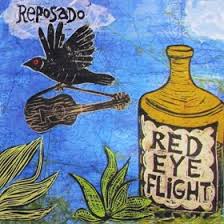
MOTIF Review: Red Eye Flight - "Reposado"

Back in the 1960s the schism that separated the musical worlds of pop and country were about as wide as the Grand Canyon herself. Perhaps the old North vs. South resentments, by then over a century old, were still sore open wounds, and those differences were reflected in their respective cultures. But slowly as the decade ended, notable rock artists began exploring the rich and vast history of true American roots music and began incorporating a country sound into their work. Notable examples like Bob Dylan’s “John Wesley Harding” and The Byrds’ “Sweetheart of The Rodeo,” today considered pioneering country-rock classics, were initially met with suspect and scorn from both sides of the musical fence. In fact, when the latter attempted to promote their album on The Grand Old Opry’s radio show, its host, the Nashville impresario Ralph Emery, openly insulted band members Roger McGuinn and Gram Parsons, refusing to play any of the tracks simply because he couldn’t see past their “long hair” and “hippie attire.”

Thank goodness today such petty and close-minded attitudes have given way to a willingness for fans and artists alike to cross over into various musical styles without prejudice. I don’t think anyone would disagree that today the lines that separate country music and pop are as blurry as they’ve ever been throughout the rock era. Which leads me to an impressive country/roots collection titled Reposado, by the outstanding Rhode Island based recording artists, Red Eye Flight.

Though the release marks their recording debut, Red Eye Flight have been performing throughout Southern New England since their inception in 2005. Band members Rand Torman (drums), Ken Taylor (bass), Tim Murphy (acoustic guitars), Derek Escher (guitars, mandolin), and Kelly Cleveland (percussion, keyboards) not only form a tight instrumental unit, but the added element of each member contributing vocals gives their overall sound a cohesive edge. The seven radio-ready tracks were produced by local music heavyweight Emerson Torrey (late of The Schemers), and but for one song, contain all-original material.

The album kicks off with the country-folk flavored “Sandstone Creek.” The song’s gentle guitar picking and earnest rhythm, not to mention Murphy’s voice, reminds me of some of James Taylor’s best work. On the refrain, “Now that old freight train has turned in its last miles, too soon be gone,” he’s joined by Kelly Cleveland, whose beautiful harmony is reminiscent of Emmylou Harris.

On the snappy Tex Mex “Making Margarita Cry,” Ken Taylor takes over the vocal, along with another former Schemer, Richard Reed, on the accordion. “I spent six weeks in a Tijuana jail, to this day I don’t know why, cause all I remember doing wrong was making Margarita cry …”


Reposado‘s one cover song, Dave Rawling’s “I Hear Them All,” is a pitch-perfect reworking, which illustrates Red Eye Flight’s passion for the great American song and all that its tradition entails. All told, Red Eye Flight accomplish one credible work of art through their amalgamation of country, folk, roots and rock. And to borrow from the lyrics, throughout Reposado, these musical elements “take their places at the table when they are called.

Tuesday, April 15, 2014

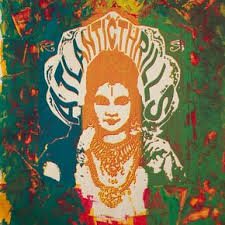
MOTIF Review: Atlantic Thrills - (self titled)


In the early 1960s, much of American Top 40 rock & roll was dominated by a Southern California phenomenon known as the surf sound. Made famous by the likes of Jan & Dean, The Rivieras, Dick Dale, and of course the quintessential sun and surf band The Beach Boys, this music style reigned supreme for a solid five-year run, until being all but disseminated by an invading army of floppy-haired English rock bands in 1964. But what if The Beatles had decided to turn right at Greenland and never made it to our shores at all? What if the surf sound had actually been given the opportunity to grow and mature beyond the primitive recording techniques and relative innocence of Kennedy-era USA? Obviously no one can say for sure, but I can imagine it sounding something like the Providence-based band Atlantic Thrills.

Starting in 2010, Dan Tanner (guitar/vocals), Eric Aguiar (bass/vocals), and newest member Josh Towers (drums) formed an outfit that exemplifies everything that is right about unbridled, wild, gin-soaked, frat party rock & roll! If you’re looking for a socially conscious band whose goal is to end global warming while searching for the lost chord, man are you on the wrong road! These guys are all about fun – that is, the kind of fun that’s had fathers locking away their teenage daughters for decades now.

Coming off the heels of a tour that saw stops in Brooklyn, LA, and all points between, Atlantic Thrills have been promoting their self-titled album across the country. The 12-song collection consists of authentic garage rock with a punk attitude. Granted, these boys aren’t shy about lifting a lick or two here and there, but I reckon that’s part of their anything-goes attitude, which actually defines their sound.

atlanticAtlantic Thrills kick off with a dark rocker, “Problems.” On this hard-driving track, Tanner uses that slightly Middle Eastern scale used in surf rock songs by guys like Dick Dale (himself being of Lebanese descent). The enigmatic lyrics portends the character ridding himself of a past haunt, human or otherwise: “I killed all them demons, let them drown in their blood – I squandered my time, I gave up more than I should. If she ever found me, likely be done for good – I killed all my problems, left ‘em deep in the ground.”

One of the standout tracks is the surf-rock opus “Day At The Beach,” for which the band also produced a hilarious accompanying music video. Addled with intertwining sand, sun and drug references galore, the song and video are like a Frankie & Annette Beach Blanket movie gone horribly wrong! “When I woke up in the city I was puffin’ on a mighty bone – I picked up a couple of biddys with some towels and a bag full of blow – I was high as a kite in the sand dunes…I wanna stay at the beach.”


If some younger music fans unfairly associate the surf genre with lighthearted beach romping through sea and sand alike, Atlantic Thrills go a long way to dispelling that myth. There’s no reason surf rock can’t be every bit as heavy and rebellious as modern alternative or old-school punk, and these guys are proving it at every stop on their hopefully never-ending tour!

Thursday, April 3, 2014

MOTIF Review: Hope Anchor - "Never Gonna Let You Go"

never-gonna
If you should live out in Toad Suck, Arkansas (it’s a real place, look it up), the name Hope Anchor probably doesn’t immediately conjure up much, except perhaps some vaguely nautical term. But residents of the first colony to declare its independence from England know Hope Anchor is a direct reference to the seal of The State of Rhode Island and Providence Plantations (or as the cool kids simply call it – Rhode Island). Now if you happen to be one of them crazy music-lovin’ types, then you know Hope Anchor to be a Rhode Island supergroup, containing former members of various top area bands coming together to create well-written, cutting edge rock.

Formed in 2005 by Cranston native Terry Linehan, who had previously held the enviable job as backup guitarist for Green Day on their North American Tour, Hope Anchor came together as a project with impressive songwriting as the main objective. Accordingly, Linehan enlisted experienced, like-minded musical recruits Paul “Pip” Everett (formerly with Blizzard of 78) on vocals, veteran bass player Jack McKenna (of Backwash fame), drummer Paul Myers (also of Blizzard of 78),  violin/cellist Matthew Everett, and the previous guitarist of Hope Anchor, former member Eric Fontana (formerly of Mother Jefferson), who still appears with the band on select occasions.  Collectively, Hope Anchor has released arguably one of the finest albums to come from the biggest little state in 2013, the highly eclectic Never Gonna Let You Go.

Each of the disc’s nine tracks illustrate the band’s diverse sources of inspiration, ranging in styles from ’80s pop-tinged melodic rock, to the post-punk / new-wave sounds of the Psychedelic Furs, with even some Beach Boys-influenced harmonies thrown in the mix. To underscore this diversity, the disc opens with “Get Away Blues,” a heavy-driving, blues rock number that immediately declares these guys are loaded for bear. Throughout, Pip plays some relentless electric harmonica, with a confidence usually reserved for lead guitar slingers.  In fact, if I didn’t know better, I would have thought I slipped in a Young Neal & The Vipers disc by mistake!

In contrast, the upbeat “Here We Go” is a three-minute slice of jangly power-pop, which introduces a tastefully punctuating horn section. The much darker “Got To Be Alright” contains some powerful lyrics, sung in subtle shades of Michael Hutchence: “We sat down on the back porch, the birds are singing time, if you climb in my overalls I’ll show you a good time – my mind was in the gutter till you hiked up that dress, you sent my heart a thousand miles and now its truly blessed.”


Much like Blind Faith, The Traveling Wilburys, and Foo Fighters before them, Hope Anchor contains individuals who have enjoyed at the very least a modicum of success, in their previous incarnations. And as Never Gonna Let You Go proves definitively, when combined the sum of their parts equals one hell of a powerful rock & roll outfit.

Tuesday, March 25, 2014

MOTIF Review: Torn Shorts - "Through The Mill"

It looks like the good folks with the WBRU Rock Hunt got it right again this year. They usually do (not counting 1993 when a band intimately related to the author of this article lost out to Angry Salad…but I digress). And as with acts like The Schemers in 1982, and Sasquatch & The Sick-A-Billys in 2005, Providence’s own Torn Shorts has taken top honors in 2013′s edition of the prestigious competition.
Technically, Torn Shorts is the collective name for the creative efforts of the multitalented musician/songwriter Josh Grabert. Though Grabert has gained a great deal of notoriety performing live shows throughout New England as a one-man-band under the Torn Shorts banner, Grabert has enlisted the help of Zach Zarcone on bass, Nick Molak on guitar and drummer Brendan Tompkins to record Through The Mill.

With the album’s opening track “Brow St,” Grabert demonstrates an ability to engage the listener with radio-friendly, hook-laden rock & roll. Delivered with a voice reminiscent of Albert Hammond combined with a bit of a “New Morning”era Bob Dylan, he establishes himself as a virile songwriter. This fact is underscored all the more by his creative use of space within the verses, an underused yet potent technique, not only with writers, but soloists as well. “’Drink that scotch’ she says before the bad news – that’s why I keep crying The Nice Guy Blues – I was never ready for the big show – the older I get the less I grow.

“Dying Houses” is a dark requiem for urban decay and those who endure the daily fight for survival. More than just a lament or a first-person decrying of their own dreadful situation, Torn Shorts presents an indictment on all of society for a broad sense of apathy toward their strife. “All these dying houses on these dying streets, in the deadest part of town – Don’t offer up any redemption, just cry your tears while we drown.

As lofty as much of the lyrical content is throughout Through The Mill, great musicianship is at the forefront of the album. The groove-drenched instrumental “Bob’s House” and the hypnotic “Whiskey Song” are standout examples of that tuneful proficiency. Quite cleverly, the latter employs a very cool technique of using what I presume was a mono demo as a looped backing track, and then overdubbing vocals and band on top of it.

From what I understand, Josh Grabert and his Torn Shorts put on a wildly frenetic and energized live show, somewhat contrastive to the overall vibe of  Through The Mill. Admittedly, I’ve yet to see them in action. But judging them solely on the album, I’m quite confident that WBRU got it right once again in 2013.

Tuesday, March 18, 2014

MOTIF Review: Six Star General - "Hair Supply"

In October of last year, we lost a musical pioneer who many consider to be the father of alternative rock, Lou Reed. Hailing from an era where the vast majority of teenage record buyers were still consuming “boy loves girl” lyrical content, he and his band The Velvet Underground provided a truly alternative approach to songwriting and performing. Though seen at the time as a commercial flop (their debut album selling less than 350,000 units upon release), his deadpan vocals and gritty prose contributed in elevating rock to an art form, and went on to influence four generations of musicians and still counting.

Whether consciously or not, one such band that seems to have garnered influence and possesses many of those same prodigious qualities is Providence’s Six Star General. Their latest CD offering, Hair Supply is a concrete example of this trio’s ability to move effortlessly from post-psychedelic trippiness to hard metal authority, yet all the while remaining just esoteric enough to leave the listener intrigued.  The band is made up of Kyle Jackson on guitar, Mark MacDougall on bass and vocals, and drummer  Dan Ulmschneider.  Though each of these gentlemen have incurred some health issues over the past year, which merely delayed the process of promoting Hair Supply, these generals are back in service and ready for action.

The disc opens with the ethereal “Christopher Walken,” a rhythmically driving, four-chord tour de force, that’s every bit as mysterious as its namesake. In a musical styling reminiscent of The Flaming Lips, and a stolid vocal delivery that evokes the aforementioned Reed, MacDougall presents the listener with beautifully disjointed poetry: “You walk in, Chris Walken claims he’s the king of New York… Milwaukee, Wisconsin will keep all the teachers away….Keep smoking, keep joking, it all evens out in the end.”  Throughout, an angelic chorus subtly blankets the entire mix, culminating to a steep end, as the band-proper fades out.

The band changes course in the next track, the riotous “I Don’t Know Where We’re Going (But I know That It’s Not Good).” Kyle Jackson dials in his best Tony Iommi guitar-tone for this cautionary tale of inebriate excess. “Thrill your brain with alcohol, let me buy this round for you – You took too many shot glasses, so what are we gonna do… I don’t know where we’re going, but I know that it’s not good.”

One surprise on Hair Supply was Six Star General’s raucous rendition of Daniel Johnston’s “Life In Vain.” Done originally as an acoustic number,  MacDougall and the boys transform a whiny, teenage angst-ridden song (featured last season in an episode of HBO’s original series “Girls”) into a catchy, palatable rocker, far better suited for national broadcast than its impotent original.

There is little wonder why Six Star General’s eight-song Hair Supply has been nominated for Alternative Album of the year. In fact, the only thing that has me scratching my head is one line in the band’s biography section of their website: “[Six Star General] make very little money from their music.” How can that possibly be true, considering the band regularly plays to packed houses in rooms throughout New England? It’s a disgrace and a scourge on the entire local music scene that talent this extraordinary goes relatively uncompensated for their efforts. I’ll have more to say on the overall topic in an upcoming article. But suffice it to say that Six Star General has earned their stripes over their past decade of creating absorbing alternative rock.

Tuesday, January 21, 2014

MOTIF Review of Mike Laureanno - "Pushing Back Wintertime"

At its basic core, a well-written song should be able to transport the listener from out of the here and now, and into the songwriter’s state of conscience. Much like a movie or a good book, a song with an end goal that transcends mere entertainment value often allows us to live in far-off times while re-examining our own reality, if only for three minutes. And while taking in Pushing Back Wintertime, the new release from gifted folk artist Mike Laureanno, I was almost immediately plucked from the claptrap of our plugged-in / always-on world to a simpler America, where an honest survival reigned most important to everyday life.

Rhode Island’s Mike Laureanno is truly a multi-talented Renaissance man who wears the hats of singer, songwriter, producer, engineer and musician with equal proficiency. He combines a gentle, experienced voice reminiscent of Tom Chapin, with the potent penchant for storytelling like Harry Chapin.  In all the positive praise he’s garnered over the years, one word seems to be repeated in describing his body of work: poignant. And the 12 tracks that make up Pushing Back Wintertime are ripe with poignant themes and heartfelt imagery that allow the listener to experience a slice of Americana through the eyes of the quintessential everyman.  Not always the America of apple pie and spacious skies mind you, but often the one of abandoned factories and abandoned souls left in its wake. Those whose American dream somehow passed them by. Yet through it all, Laureanno’s everyman endures with pride intact.

One such character is illustrated in the track “Joe,” a victim of his times and circumstances, who now plays music for passersby at bus stations. “Joe is holding court at the bus depot, buskin and dancing, strumming on an old banjo. On the flip-side of luck, Brother can you spare a buck?” Though many writers would succumb to the temptation of injecting indignation, railing against society for allowing such injustice, Laureanno takes a softer stance by offering up a sliver of humanity: “... time in jail is warm, three hots and a cot — The sergeant knows his name, slips him some change.”

“Have Mercy On The Sinner” is a wry look at the flesh failings of purported pious men of the cloth, through the recounting of three Catholic school teachers. Rather than a grandiose indictment, Laureanno uses simple imagery to illustrate man’s mortal imperfections: “They took a vow, there were no women, but there was plenty of red wine — Was Father Wolf ever forgiven when he hung himself at Christmastime?”

One of my favorites in the collection is “Little Red-Winged Blackbirds,” an  uptempo number that references the still unexplained phenomenon of 5,000 birds mysteriously dropping out of the skies above Beebe, Arkansas, on New Year’s Eve a few years ago. Mike Laureanno juxtaposes this event to the death toll of American military serving in Afghanistan and Iraq. “Little red-winged blackbirds falling from the sky  – Five thousand blackbirds, but the true count’s classified — Roosting in the willows, preened lean and fit — Five thousand blackbirds, with their bright red epaulets.”

You can have your Taylors, Simon, Chapin, Stevens (a.k.a., Yusuf or whatever he’s calling himself these days), Mike Laureanno is every bit the songwriting, storytelling, folk balladeer that they are, with even more humanity in his words and empathy in his voice. He is destined to be one of Rhode Island’s greatest treasures, and I hope to be engaged by his work for many years to come.

Wednesday, December 18, 2013

MOTIF Review of The Mighty Good Boys - "It Aint Easy"


What determines a hit? Obviously nobody really knows for certain, or we’d all be millionaires with our songs saturating the airwaves from sea to shining sea. There are, however, a few timeless concepts in the music world that guide an artist or producer in focusing their project in a certain direction. And in listening to the new CD It Ain’t Easy by Rhode Island band The Mighty Good Boys, one such truism comes to mind –  the concept of accessibility.  Despite whatever genre a band tackles, is the material palpable to a wide enough audience to be a success? In the case of this amazingly talented American roots-rock / bluegrass / mountain-music act, the answer is a resounding yes. And with a style so eclectic and far removed from today’s concept of pop, the waves these guys are making on a relatively young audience is nothing short of impressive and DEFINITELY not easy.

Lest there be any misunderstanding, The Mighty Good Boys are not merely some Bill Monroe also-rans. On any given night, they can be found on stage pulling out a hard driving country-rock extravaganza that undoubtedly has Duane Allman smiling down in approval. But the focus of the all-original It Ain’t Easy is clearly a stripped-down version of their sound, with a huge nod to some veritable Appalachian-mountain-folk influences, which remain authentic as well as accessible throughout.

The Mighty Good Boys consist of founding member Corey Millard on vocals, guitarist Travis Conaway, Jeff Kidd on harmonica, and the rhythm section of Mike Walker and Nick Carr. Right from the disc’s first track, the frenzied rollicking “Working Man,” it becomes quite apparent that as musicians these guys are super tight. Another immediate standout element is Corey Millard’s vocals. In an earnest voice that just hints at an ever-so-slight cry, Millard’s eloquence easily equals that of The Band’s Rick Danko (just listen to his verses in “The Weight” or “Ain’t No More Cane” and tell me if I’m not wrong.) “Ain’t no doubt I’m a workin’ man – Make my living with my hands – Leaves me hard and money drained – And morning’s but a boozy pain.”

Things slow down a bit with the old-timey sing-a-long “Chicago.” In an innocently subconscious country reworking of “A Fool Such As I,” the boys lay down an infectious gang vocal refrain of  “Been gambling lives, for a price you cannot name – But I’ll meet you in Chicago all the same … ,” which had me singing along, despite my best efforts to resist.

And while on the topic of sing-a-longs, the album ends with the sardonic “Don’t Be A Martyr.”  With gin-soaked verses and drunken choruses, the track seems to sum up what The Mighty Good Boys are, in one 2-minute and 57-second inebriated opus. “I should have got a typewriter when I was feeling lighter – I could have got me a woman, and lost her , and then wrote a book to spite her - Don’t be a martyr, just try harder Don’t be a martyr, just try harder, I’m telling you.” After your 10th shot of  Popov, that logic makes perfect sense.

If pressed to describe The Mighty Good Boys’ latest CD It Ain’t Easy, one could use all those aforementioned labels of  Appalachian-roots mountain-rock  folk-a-billy ….WHATEVER. In the end, the band has a unique, highly accessible approach to songwriting and performance. And like so many who’ve come before them, they’ve done this by going back to that perennial well of  inspiration that is simply American music.


- See more at: http://motifri.com/cd-review-the-might-good-boys-it-aint-easy/#sthash.WCGyDc9G.dpuf


Thursday, November 28, 2013

MOTIF Review of “Welcome To The Cosmic Factory”

It's getting progressively difficult for a band to make their mark on the local music scene, let alone the national one. More now than ever, young (and some not so young) ambitious musicians are putting together projects, armed with over a half century's worth of inspiration, and marching out headlong into the cut-throat world known as the live club scene.  To the outsider, these upstarts appear to be like mice running around a maze looking for that unattainable hunk of cheese, convinced with each turn that it's located just around the very next corner. And yes, to the uninitiated eye, this chase might seem like an act of futility.  But to hungry bands like The Cosmic Factory, all the obligatory hard work is quickly yielding rewards.

The Cosmic Factory is the brainchild of Rhode Island based guitarist Lee McAdams, who in 2008 began a two year hunt for like-minded musicians to round out his vision for a funky, “trippy” hard-rocking trio. Though he would perform with several musicians before settling in on just the right combination, McAdams eventually enlisted the rhythm section of former schoolmates Mike Baker on bass and vocals, and Dewey Raposo on drums.

Although they have their own side-projects in which members often intermingle, The Cosmic Factory remains the band of priority for these three local rockers. After spending much time honing their collective skills by performing high-energy shows at venerable venues such as The Met, Providence's The Spot, and Lupos, they have emerged with a nine song debut disc, “Welcome To The Cosmic Factory”.

Right from the opening moments of the disc's first track, “Show You”, it's clear that these guys have some chops. Rather than barreling in with an over-the-top knockout punch, the band eases the listener into the album, with a slithering groove laid down by some syncopated rhythms courtesy of Raposo, and Baker's velvety approach to vocals in lines like: “I'd love to be the man to take you back to Heaven...” And holding all components together is the schooled guitar playing of McAdams, who with each unfolding section seems to channel another legendary guitarist, shifting from Junior Marvin to Jeff Beck to Jimmy Page, without as much as a hiccup.

Though the band culls much of its sound from classic artists, these guys are most certainly a modern outfit. The track “Stick Fishin'” is almost too catchy to be branded “alternative”, but nonetheless holds the earmarks of today's 2013 rock sound. With it's heavy driving rhythm and equally heavy grunge guitar tone, the song pulses along in shades of Alice In Chains but far more potent. I personally enjoyed the homage to The Beatles following the guitar solo, with the lines “Can you take me back where I came from. Brother can you take me back....”  Nice White Album reference boys!

The entire disc encapsulates some of the strongest instrumentation I've heard from a local band in some time  In fact the only fault I can find with “Welcome to The Cosmic Factory” lies in the track. “Good Vibrations”. There's nothing wrong with the song itself mind you, to the contrary it has an infectious ska/reggae beat with some great use of wah-guitar by Lee McAdams. That said, using the title of arguably the most celebrated and renown studio recording of the 20th century is to say the least, ill-advised. I didnt like it when Marky Mark and The Funky Bunch did it in 1991, and I dont like it anymore now!  

But taken in total, that's small criticism compared to the overall quality and talent The Cosmic Factory possesses. And if their quickly expanding fanbase serves as any indication, this trio is not merely running the maze in vain, but rather have a legitimate shot of making a real mark on the entire scene before long. I cant wait to see what product comes out of the Factory next...

Friday, October 18, 2013

MOTIF Review: The Silks - "Last American Band"

I've been accused of taking rock & roll a tad too seriously. You see, I'm one of those people who have lost countless hours of sleep wondering why it all went so wrong. How could an enterprise that once boasted revenues twice that of the colossal motion picture industry be so disposable in our 21st century culture? Today's 99¢ download is often tomorrow's forgotten impulse purchase. And the reason is simple - there's very little coming out of the rock world worthy of a second listen. I'm looking for Janis Joplin and all they can give me is Miley Cyrus?!

Of course the one glimmer of hope for rock's future fate is placed squarely upon the local scene, safely removed from the cynical reach of corporate greed and focus groups. And it's right here in Providence where band's like The Silks are emerging to steady the course and reinstate dominance. Clearly, this blues driven rock & roll trio and I seem to be on the same wavelength, as their band bio proclaims “Rock and Roll may not be dead, but it does seem like there’s a priest leaning over its bed... if The Silks have anything to do with it, the body will soon be out of bed, bopping around the room.” I could not agree more.

Led by singer-guitarist Tyler-James Kelly and the rhythm section of Jonas Parmelee on bass and Matthew Donnely on drums, the band has sprung onto the scene with their debut release “Last American Band”. Far from the usual collection of over-covered blues standards and fumbling self-indulgence solos, often associated with a band's first effort, The Silks present eleven highly polished tracks that belie their freshman status.

Clearly these guys have rock & blues in their DNA, as evidenced by the opening slide-guitar salvo on the disc's first song “Livin' In The World Today”. Kelly seems to channel Elmore James for an effortless run of slide work which remains tasteful throughout, and never showy. In an earnest vocal that derives its power from Paul Rogers and its snarl from Eddie Vedder, Kelly proclaims “I'm so tired of living in the world today.... I'm so tired of living in the world this way"

In contrast to the hard driving numbers, The Silks reach down deep for the acoustic folk-blues dirge “Try All You Want”. In a style reminiscent of an Exile-era Rolling Stones, Tyler and company incorporate harmonica and soulful background vocals in this dark, gritty, back-alley singalong.

Any A&R man worth his weight in gold records would pull “Mountain Man” as the strongest contender for a single. It is three-minutes and twenty plus seconds of pure chart-topping, hit record material (if it was 1976 of course). No matter what the year, the song's catchy musical hooks and infectious refrain leaves an indelible impression to any listen within earshot. “I gotta get away from the man, I know you won't understand, I guess that's why they call me The Mountain Man...” Bob Seger could resurrect his career if he ever managed to pull out a song as good as this one.

These few examples serve only to highlight what The Silks have accomplished on “Last American Band”. They perform with a sense of urgency and write with the kind of authenticity bands twice their age have long since abandoned. The Silks might just be that perfect dose of strong medicine needed to get rock up off its deathbed, by getting rock fans back into the stores and clubs for a much-needed fix of good NEW fashioned rock & roll.

Monday, September 23, 2013

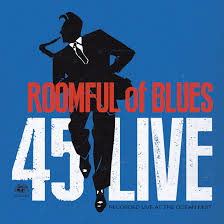
MOTIF Review: Roomful of Blues – “45 LIVE”

Sitting down to review a new Roomful of Blues release is a little like trying to critique the air. Overstatement?  Perhaps, but consider this: for over 45 years, no one entity has come close to not merely representing, but rather defining the very fabric of what the New England music scene is, better than that ubiquitous mob of swingers called Roomful of Blues. And just as The Beatles hailed from Liverpool only to go glacial,  Roomful sprang from little Rhody and in short order created a fanbase from East Coast U.S.A. to West, Europe to Asia, and everywhere people enjoy a heavy jump beat with luscious brass punctuating the whole swingin’ stew.

The Grammy award winning band started in 1967, under the guidance of guitar-giant Duke Robillard and pianist Al Copley. Through the ensuing decades, Roomful of Blues served almost as a musical refinery plant where more often than not, musicians came in great and left legends. Names like Ronnie Earl, Lou Ann Barton, Porky Cohen, Ron Levy, Dave Howard, Curtis Salgato, and of course, the aforementioned Robillard all emerged from Roomful’s lineup elevated to cult status among those lovers of the genre.

However, it’s with their terribly-potent current lineup that Roomful releases 45 LIVE on Alligator Records. Spanning their entire five-decade career, the album contains 65 minutes of what made this swing-blues juggernaut a household name. Led by guitarist Chris Vachon, the eight-piece Roomful of Blues, featuring original member Rich Lataille and new singer Phil Pemberton, made great inroads toward capturing that ever-allusive “live club vibe” on this, their 23rd disc.

Recorded over a three-day engagement at Matunuck’s Ocean Mist (Rhode Island’s answer to The Stone Pony),  45 LIVE wastes little time getting into that unmistakable Roomful of Blues joint with the heavy swinging “Just Keep On Rockin.” In a voice reminiscent of Kim Wilson (though never derivative), Phil Pemberton bolts out vocals in confident bursts of soul “My baby loves to travel with the band. She travels with us all across the land -  Every roadhouse and every state there’s a line out the gate…

Those passionate about the genre know it’s a  melange of various American roots influences, ranging from Texas swing to Chicago blues, right down to New Orleans’ Cajun sounds. And it’s with the latter that Roomful adds their own touch to the Hank Williams standard “Jambalaya (On The Bayou).” And in demonstrating just how diverse those influences are, the band effortlessly transitions into Magic Sam’s slow, driving blues number, “Easy Baby.” Throughout, Chris Vachon steps out from all that brassy goodness, guitar in hand, and treats those within earshot to some painfully eloquent licks, dripping with much tone and taste.

But as with any great band, it’s always that one certain original crowd-pleaser that becomes synonymous with the band itself.  And for Roomful of Blues “Dressed Up To Get Messed Up” is that number. Omission of this perennial favorite from any Roomful retrospective, either live or studio, would be tantamount to criminal.

The music business has always been a risky, unpredictable proposition. And Roomful of Blues has not only thrived through decades of coming-and-going trends and styles, they’ve actually transcended from a band into an institution.  Undoubtedly, in the ensuing years, membership in Roomful’s lineup will change, but their position as the very best jump-blues, swing rock & roots act will easily remain undisputed for many decades to come. 45 LIVE outlines precisely why that is.

Tuesday, June 25, 2013

MOTIF Review: THE QUAHOGS - "Spasms"


A quahog is an edible, hard-shelled marine bivalve mollusk (aka, a clam), which is native to the eastern shores of North America, from Prince Edward Island to the Yucatán Peninsula. The Quahogs are something completely different, barring the fact that they too hail from the Eastern shores of North America … well, Providence, but you get the idea. Far from being something you’d wanna deep-fry, the band known as The Quahogs combine the best elements of folk, rock and country into a gut-wrenching, raw, rootsy blend, which throughout retains a relevant, youthful sound.

The band is the brainchild of Quahog songwriter and singer-guitarist Steve Delmonico, who in 2011 began recruiting like-minded musicians to flesh out a backlog of his song ideas. The final lineup of Kevin Aubin on drums, Chaz Weber and Jim Galvin on lead guitars, and Ethan Kerrigan on bass pooled their collective talents into a forthcoming project titled Traveler’s Log. Though that CD is due out any time, The Quahogs decided to release a prelude EP of new material called Spasms, which is free to download on their various social media sites.

The EP comes at a precarious time for the band, especially for Steve Delmonico, who has been laid up and out of service for several months battling a severe case of pancreatitis, brought on by, as he puts it, “binge drinking like an idiot.” And it’s that kind of honesty that underscores his entire style of songwriting, in that he demonstrates a fearlessness to feel his own pain and transcribe it to song. In fact, most of the songs on the new E.P. reflect a sense of frustration and isolation he clearly must have felt during this dark period, which included stints in both the hospital and rehab.

In the time-honored tradition of greats like Bob Dylan, Townes Van Zandt, Jim Morrison, Kurt Cobain and other songwriters that he and his fellow Quahogs admire, Delmonico writes from a place of courage and veracity. After all, good songwriters give the public what they want. Great songwriters tell them what they need to hear. On the track “Midnight Train,” Delmonico minces few words in detailing a sense of loss and lament in the wake of damage done: “I’m drunk again with you on my mind / It’s happened once before, it’s happened every time / All I wanna do is drown the pain, and forget the day you took the midnight train / Fuck the midnight train, she shot me low / My baby left me about a year ago…

Another standout track is “Grand Central,” which at first blush sounds like an updated version of something The Byrds would have done on their 1968 foray into country music, Sweetheart of the Rodeo. But make no mistake, their work is not derivative, it’s inspired: “Went to Saratoga Springs, right back down to Queens to forget what I left behind me / Well it ain’t so bad, I got a flask and a brand new pack, and I’m thinking baby just maybe someday someone will save me.”

As is often the case, lack of space permits me to expound on just how impressed I am with The Quahogs. And considering how long-winded I can be, maybe that’s for the best. But I can declare without any hesitation that these few tracks represent a sound and songwriting style that rank The Quahogs among the best original bands to come out of the area in some time. Most artists spend many months and even years looking for their own unique voice. But in this case, it seems like the voice and sound came looking for a band. And in The Quahogs, worthy caretakers were found, and hopefully they’ll carry on the tradition of unvarnished, honest songwriting and heavy roots performances for many years to come.

Tuesday, May 28, 2013

MOTIF Review: FABER - "Pain Don't Hurt"

While watching the 2013 Rock & Roll Hall of Fame Ceremony, I heard a fascinating quote during a videotaped package played before Randy Newman’s induction. In it, the notoriously acerbic singer-songwriter bemoans the fact that rock music takes itself far too seriously. And now here I am a week later listening to Rhode Island rock band Faber’s new CD, Pain Don’t Hurt, and I’m thinking to myself, “No one is ever gonna accuse these guys of that!” Any band whose biography accounts how “[Faber's] display of alternative rock riffs and references to 80s movies pleases their four loyal members of the Faber Army …” clearly has their collective tongue planted firmly in cheek.

If you’re not familiar with the musical juggernaut that is Faber, they can best be described as a cross between Green Day, The Vapors, and Zamfir: Master of the Pan Flute (ok, not so much the latter, but I thought the boys would appreciate the reference). Their quirky brand of three chord rock won’t be causing Emerson, Lake and Palmer to lose any sleep tonight. But that said, there is something extremely satisfying about their unabashed lack of pretense. And that’s not a bad thing at all!

Faber consists of Dave Calkins (lead singer and guitarist), Sean DeLong (bass), Matt King (another guitarist) and Artie Tefft (drums). A quick glance at their promotional photos tells me these guys are anything but wide-eyed kids attempting their first stab at big time rock & roll. They’ve clearly been around the block and unless I’ve completely misinterpreted their music, they know exactly what they’re doing and are having a blast doing it! Hell, one of them is wearing leather chaps for f@#ksakes! The prosecution rests, Your Honor….

Pain Don’t Hurt consists of 12 catchy tunes whose genius lies not in the often-adequate instrumentation, but rather in the lyrics. One such example is “Some Strange,” a three-minute litany of every bad pick-up line known to man. Although I’m inclined to just reprint the entire set of lyrics, here’s a select few. “Do you have a Band-Aid? I scraped my knee falling for you. / I am not a genie, but I can make your dreams come true. / Was that just an earthquake, or did you just rock my world?  / Do you know CPR, because you take my breath away?” Fair warning ladies, I’ll be using a few of those lines myself this weekend.

“Let Me Know” is a perfect example of Faber’s minimalistic, yet extremely effective, approach to songwriting. Three chords – CHECK! Repetitive refrain of “Let me know, let me know, let me know how you feel” – CHECK! A classic mid-70s-style Who ending that could be mistaken for a train set falling down a flight of stairs – CHECK! It’s only rock & roll, but I do like it.

Clearly these guys are not a studio act by any stretch. Faber’s music is quintessential live fodder, meant to be absorbed through a heaving cloud of humidity, sweat and sound that only a bilgy club venue can provide. Granted, some of the material falls under the “It’s so bad, it’s good!” banner, but by and large, Faber is exactly what much of the alternative audiences today crave – three chords and three minutes of unpretentious rock. Faber made me smile today, and that’s more than Justin Bieber has ever done for me, dammit. Who could ask for anything more?

Wednesday, May 1, 2013

MOTIF Review - ERIC BARAO (self-titled)

If you travel in certain circles of bitter musicians who nightly lose a piece of their soul toiling at dives and bars for what often amounts to little more than gas money, you’re likely to hear a few groans when the topic of Berklee trained musicians is broached. Sure, I’ll confess that I might have rolled an eye or two myself in the past. But it doesn’t come from a place of jealousy as much as it relates to a bad rap college-taught musicians have been branded with over the years. It usually goes something like, “Yeah they may know their instrument, but they don’t play with any feeling. It’s all academic; no heart – no soul – no street smarts.” And like most stereotypes, that one overgeneralizes by pointing to a small constituency of players. In fact, if one wanted to illustrate a Berklee Education put to good use, they need look no further than to the career of one such alumni, New England’s own Eric Barao. 

Barao was a co-founding member of local perennial power-pop favorites The Cautions. Back in 2006, while reviewing their then-current release, I declared them “whimsical tunesmiths,” and for good reason. What I didn’t realize at the time was the source of that songwriting acumen. With his eponymous debut solo release, appropriately entitled Eric Barao, his gifted song-constructing abilities are such that they could make even the most cynical, curmudgeonly music fan sing along with delight.

The CD kicks off with the frenetically infectious “On Holiday,” a jaunty, bouncing piece of pop goodness, which will leave the listener singing the refrain long after the disc is safely back in its jewel case. Barao’s strongsuit is undoubtedly his quirky turning of a phrase, which is apparent throughout: “Eight O’clock the hotel bar’s loud, the senior sales department took control of the crowd.” Barao invokes a softer approach on the subtly Lennon-esque track “Trying Too Hard.” Replete with mellotron “strings” and some very tasteful guitar work, the track features a haunting melody from Eric: “Your friends and my friends don’t mix, they try to hurt us with their dumb politics, maybe I’m just trying too hard.”

With a beautiful opening slide guitar part that sounds as if it came from George Harrison himself (apologies for repeated Fab referencing), “New World” is clearly a standout track.  On it, Barao conjures up a slice of wry social commentary: “Let the polar ice caps drift and drive your hybrid off a cliff, they’ve found a new solution – Let’s line the streets to point and shoot a million aerosol can salute to a new Earth.

After several nonstop listen-throughs of the album, it’s quite evident that Eric has spent a great deal of his life learning the magic formula that goes into making a great record.  Songwriting aside for the moment, Eric Barao as a complete piece of work sounds rich, warm and dense, yet all the while retains the mandatory high-gloss of today’s pop records. One would imagine this dichotomy is due in no short measure to the production team Barao amassed for the project. The enlisted control room sidemen includes Ducky Carlisle, whose mixing credits include blues legend Buddy Guy, Johnny Winter, Eddie “Knock On Wood” Floyd, and the album’s producer Bleu, who’s written songs for the likes of Selena Gomez, the Jonas Brothers and Hanson.

It’s no surprise that Barao has had his songs used in national commercials and major studio movie releases such as the hilarious Balls of Fury (a must-see flick, if for no other reason than Christopher Walken’s role as the criminal mastermind Feng.) Talent this big does not go unnoticed very long. If public taste ever returns to its collective senses and starts rewarding artists for things like clever songwriting and strong production value, Eric Barao should be a household name before long.

Tuesday, April 16, 2013

MOTIF Review: MARDI GARCIA - "Wild Horse Ranch"

What exact ingredients go into the making of a great song? I have spent my entire adult life (and a good chunk of my adolescence) pondering this exact question. Suffice it to say, I’ve yet to find the magic formula, but I have been able to narrow down a handful of elements that separate the best from the rest. A good songwriter sings of faraway lands using ornate imagery in an attempt to draw a picture for the listener, spoon-feeding them any particulars necessary to flesh out said land. The great songwriter stealthily transports the listener to that distant place, as if beyond their will, if only for three or four minutes, leaving them with a sense of familiarity as if they’d been there a thousand times. And one such great writer, New England native Mardi Garcia, accomplishes such feats, and quite a few more, on her latest CD release .

In a review I wrote for Motif on Mardi Garcia six years back, I observed at the time that “her varied songwriting fodder is made up from nothing short of a geographical potpourri.” And clearly this new release only reinforces that fact, with a collection of songs reflecting personal adventures that traverse the globe from Tucson, Arizona to Dallas, Texas, all the way to Madrid, Spain and inevitably back home to Providence.

The album’s title track is a fine example of Garcia’s travelogue, detailing her days at a Tucson ranch, purportedly built on hallowed Indian burial ground: “Saguaros fat and the juniper is twisted and red the rocks piled high. The men in chains their future is a mystery, while their sentence draws nigh. And it belongs to the ghost of the past.” The song’s refrain, both catchy and poignant, expresses her intractability when being called back home by worried family members: “I don’t want to leave. I don’t want to give in, I’m stubborn like that now. And I don’t wanna’ fight, you wont find me going very far.”

Wild Horse Ranch is generally Mardi Garcia earnestly strumming along to her clean vocals, supported by a more-than-competent backing band. The combo’s strengths are on full display on the track “24 Hours In The Dark.” Inspired by a newspaper report about a controversial addiction-kicking therapeutic technique, Garcia shows a playfulness with the narrative while taking the role of the patient: Twenty-four hours in the dark and I’m a little nervous. Should I take my clothes off? No lights no sound, just the pounding in my mind. Don’t know why I did this, maybe I should sleep. You’ll get used to it, it’s only 24 hours.” 

Perhaps the darkest song on the album, “It Happened Again,” details the singer’s emotional dealings with a stalker: “Did it ever occur to you that no means no, when I tell you please let me go? You crossed that line way too many times. Broke my comfort zone and shattered my mind.” Garcia doesn’t simply take on the role of a victim, but delves deeper to further examine her own culpability: “I have this knack you know for finding your kind… It happened again, I let you in, it happened again.”

Mardi Garci is a folk singer in the truest sense of the genre. She tells personal stories about real places and genuine situations. The music itself is straightforward by design, thus leaving ample room for Garcia to unfold her vision, culled from a wealth of experience out of a lifetime fully lived.

Tuesday, April 2, 2013

MOTIF Review: YOUNG NEAL & THE VIPERS - "Full Circle"

For those readers too young to recall firsthand, the following account of recent music history will sound as improbable as the prospect of Lindsay Lohan being appointed attorney general of the United States. But there was a significant – albeit brief – moment during the 1980s when the contrasting civilizations of guitar-driven blues and pop-culture converged to form one extremely cool alliance. Artists like Stevie Ray Vaughan, George Thorogood, and Robert Cray were not only sitting comfortably within Billboard’s Top 10 charts, but their music videos were in heavy rotation on MTV, the era’s highest symbol of achievement. Generation Xers across the nation did their homework to the flickering images of the latest Fabulous Thunderbirds and Stray Cats videos. Ahh, it was a glorious time …

And out of that burgeoning blues renaissance came a newly energized throng of live club bands capitalizing on the sound at a pace not seen since Liverpool 1964, and arguably not equaled till Seattle a decade later. Though most agree that Austin, Texas, was and continues to be ground zero for the rhythm and blues scene, Rhode Island has certainly produced its fair share of authentic roots-rock and blues acts. However, one act has consistently stood out from the pack in terms of authenticity, energy, notorious live shows, and unyielding staying-power – Neal and The Vipers.

Led by the irrepressible guitarist “Young” Neal Vitullo and frontman singer/harp player extraordinaire Dave Howard, the story of Neal and The Vipers is rife with all the touchstones of a thriving rock and roll band. Having survived decades of personnel changes, ill-fated major record label dealings, and all the obligatory demons that come with sudden and sustained success, The Vipers have always followed a deceivingly simple formula. They write well-crafted and lyrically engaging songs, performed with an urgency that grabs anyone in earshot by the proverbial lapels, demanding their undivided attention.

Although not a suitable substitute for experiencing a Neal and The Vipers gig first-hand, their latest offering, e, captures one such rock and blues spectacle (recorded live at Chan’s) in all its attention-demanding glory. The disc kicks off with the dark, hard-driving original “One Horse Town,” lyrically replete with imagery of southern roads, nipping hell-hounds, boxcars, and Yankee strangers heading into unfriendly territory. It’s complete with classic Dave Howard songwriting – “Her daddy warned me on the first day he met me, and he warned his pretty little daughter, too … a man fit for hanging won’t be hanging around with you.”
“Little Miss Prissy,” another Howard-Vitullo classic, was originally released on the band’s debut CD, Hooloovoo, in 1991. Though it appeared on a previous live Vipers album sans Howard, this time Dave is firmly back in the driver’s seat. His sometimes gruff, yet always melodic approach to singing is most certainly unparalleled and I dare say unrivaled.

Equally unique, but no less impressive, is the band’s rhythm section of drummer Mike LaBelle (who I’m on record for asserting IS New England’s answer to John Bonham) and musical journeyman Steve Bigelow on bass. That said, the true bread and butter of The Vipers has been and always will be the guitar playing of Neal Vitullo. And on the album’s instrumentals “San-Ho-Zay” and the perennial surf classic “Pipeline,” his musicianship is on display in spades. If some guitarists make love to their instruments, Vitullo takes it out and slaps it around like a Ritalin-charged 10-year-old putting his favorite new toy through its paces on Christmas morning. Though never bellicose, Neal’s approach is unapologetically bombastic and always exhilarating to witness.

With Full Circle, Neal and The Vipers prove that even 20-something years into the rock and roll journey, a band can mature without ever losing a drop of its initial vitality. Any young band with aspirations toward longevity, no matter the genre, should definitely put this one on its mandatory summer listening list.

Monday, May 28, 2012

MOTIF Review : GRAND EVOLUTION - "Collide"

What can I say about GrandEvolution that I havent already written in my past three reviews of the Worcester area alt-indie-rock band? Well come to find out, quite a bit. You see this act is not merely just another band circularly swimming in the morass of stale wannabe hopefuls, chasing that ever-elusive shot at fame and fortune. Rather, GrandEvolution represents the standard to which those aforementioned nonstarters should aspire. Because well beyond the point that many musicians lose their crucial drive courtesy of a series of inexorable rejections and obstacles, GrandEvolution has continued to reinvest in their own destiny by constantly striving for excellence. And on their latest release “Collide”, excellence is exactly what’s achieved.

With all due respect to some fine backing tracks provided by Dave Shul on guitar, Marty O’Brien on bass, and drummer Matt Palermo, for all intents and purposes GrandEvolution IS Sarah Kenyon. The effervescent, eternally twenty-something singer/guitarist has put every bit of herself into this successful rock & roll project. And she’s done it by not only traveling the nation to find that just-right producer or the perfect recording facility, she’s additionally unlocked the secret to absolute musical success – WRITING, WRITING, WRITING, and more WRITING!!!! Her prolific composing has been paying dividends as of late, resulting in catchy, pop-friendly melodies, enveloped in a credible grungy alternative rock sound.

One of the best weapons Sarah Kenyon has in her songwriting quiver is the ability to invariably keep her song’s vibe youthful and airy, without ever losing any of the driving edge. Much like Brian Wilson’s work instantly conjures up adolescent memories of surf, sand, and summer, Sarah writes and sings in a voice that is inescapably young, though never puerile. A good example is the opening track on collide entitled “sweetheart”. “out on the town in the rain the sun the clouds, had so much fun hanging with you – i said goodbye, you said goodnight, called me sweetheart.”

Although the topic of lost love and broken relationships have been covered in song enough for fifty lifetimes, Kenyon indeed finds a way of expressing the hurt in a refreshingly succinct, yet powerful manner: “Seemed a perfect plan, working toward what could have been – Hit or miss, never know who you’re dealing with – Put all i had into belief and trust in you – Better off without you, i’m not looking back”

In interest of full disclosure, I like Sarah Kenyon and GrandEvolution, always have and always will. They are fully deserving of any and all accolades forwarded their way, ucn as recently reaching the semi-finals of WBRU’s Rock Hunt, and an upcoming stint at Mohegan Sun Casino. With Sarah Kenyon firmly in control of the band’s direction propelling them forward, GrandEvolution will continue to evolve (pun intended) in a manner that seems to always make their last project pale in comparison. If these guys aren’t a household name on the national scene inside of five years, one thing’s for sure – it wasn’t for lack of trying.

Friday, May 11, 2012

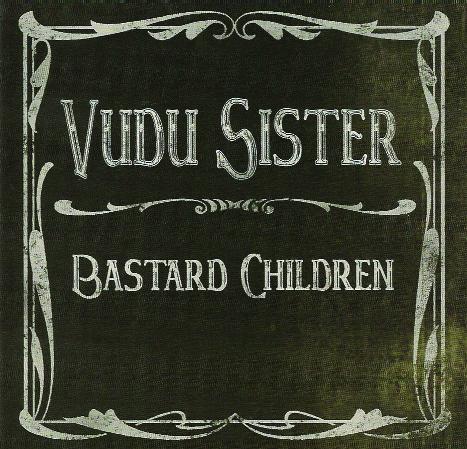
MOTIF Review: VUDU SISTER - "Bastard Children"

Generally speaking, when you sit down to listen to a song, the individual instrumental elements are right there in the forefront jumping out at you. ‘nice voice on the singer… Oh there’s the guitar solo… man, them drums is loud…’ But every once in awhile a band comes together in such mellifluous harmony that the actual sounds meld together to form one singular theme. When guitars, rhythms vocals and lyrics all transcend their respective roles and fuse together into a complete musical motif (pardon pun), that is when it becomes all about the song. And on Vudu Sister’s freshman CD release “Bastard Children”, it’s clearly all about the song.


Vudu Sister is the collective name for singer-songwriter brainchild Keith McCurdy and a varied roster of accompanying musicians, including drummer Alexander Garzone and some lovely harmony vocals from Kate Jones. Though a relatively new act on the scene, Vudu Sister have already established themselves as earnest artistic alchemist who have combined elements of traditional folk,  Appalachian mountain music, depression era protest songs , Celtic sounds, and a heaping scoop of modern alternative sensibilities.  The result is a painfully heartfelt, often dark and beautifully disturbing music that may not win over any Justin Biber fans anytime soon, but will immediately sound both familiar and fresh to those of us in-the-know.

Throughout the 10 offerings on Bastard Children, Keith McCurdy’s guitar picking and singing serves as a droning constant that appropriately sets the mood for this deceivingly simple stripped down music. McCurdy works in a voice born from such disparate singers as David Van Ronk, Woody Guthrie, and Jack White.  Though he sometimes flirts with his pitch, he does so in deference to the genre.  And perhaps most importantly his lyrics and song structure demonstrate an obvious understanding of this genre, which can often leave less-schooled artists sounding like a bad parody.

Bastard Children opens with the dirge “Psalms”, a battleground shanty that speaks of mourn and lament. With a plaintive bass drum punctuating the accompanying dobro and mandolin, McCurdy plays and sings in a manner that puts me in the mind of  Dylan’s “Masters of War”: “Can you hear the dead bell tolling, can you hear the five man drum, can you hear the death bell ringing in the deep…”

With its dark, sardonic storyline, standout track “Dead Man’s Pocket” is perhaps  the best  single example of what Vudu Sister is all about. “Somebody out there done hit him – with the blood on his hands still stained – he covered his tracks and he stole what was left inside of the dead mans pockets..”

I’m looking forward to revisiting Keith McCurdy et al when their next project is released.  With the level of maturity already displayed on Bastard Children, it won’t be long before these guys become the stewards of the entire roots scene, in New England in beyond.

Tuesday, April 29, 2008

MOTIF Review: Tim Taylor - "Too Long Gone"

While combing through hundreds of local CD releases over the past few years, I’ve seen many instances where the artist jumps the proverbial gun by recording far too early in their career. Rather than sharpening their skills, honing their craft, and mastering their specific discipline, they run into the studio like excited schoolchildren, with both ego and checkbook flailing about. The end result is most often a recorded document for all to examine, exposing just how little they really know.

Nobody can accuse Tim Taylor of this behavior. Quite to the contrary, the New England harmonica strongman, whose very name has become synonymous throughout music circles with traditional blues excellence, has accrued over four decades of personal and professional growth before attempting his first solo CD release “Too Long Gone”. The end result is a mature, well- conceived collection of indomitable covers and authentic original material, which despite a certain sophistication never losses the electric edge that defines a sound that Taylor has been mastering and building upon all these many years.

For those of us familiar with Tim Taylor’s work, there is almost an illusion that he somehow emerged from the womb already fully schooled in the harmonica licks of Little Walter. But truth be told, just as it was with the vast majority of teens in the late sixties and early seventies, Taylor was exposed to the standard hippie rock faire that wafted from festival stages and radios alike. That was until a chance attendance of a performance by The Ken Lyons Blues Band. The stark difference in their approach from the other acts on the bill, as well as the strange new sound of highly amplified harmonica transfixed the young Taylor, who by his own admission “was psychedelically enhanced at the moment”. In reference to his early recollections of the harp player, Taylor recounts: “To tell you the truth, I didn’t know what he was doing. I just heard this sound. He had his hands up to his mouth...he was making this big enormous sound. I got closer and realized he was playing just a regular little 10-hole harmonica. And that was it, I was hooked.”

In the ensuing years, Tim Taylor began to fully immerse himself in the performance styling of harp legends like James Cotton, Sonny Boy Williamson, and the aforementioned Little Walter. In doing so, he’s developed a unique approach that is far more about tone and attitude than it is about virtuosity. “I’m not a jazzy player or an accomplished lick player by any means. I just go for that big sound and feel.
Before making this solo record, Taylor spent years as one of the area’s most celebrated and prolific sidemen. With credits that include Rick Mendes and Blueswagon, The Mercy Brothers (an acoustic-tinged outfit which included Barrence Whitfield), and a four-year stint with Loaded Dice, he amassed an all- encompassing understanding of his art, which constitutes “Too Long Gone” a credible, genuine effort. Along that fact-finding road, Taylor met Marlie Wänseth, a young blues singer whose vitality re-energized his own take on the music: “She had a wonderful, natural original approach to playing the blues. She was heavy into the call-and-response, Howling Wolf grooves...It really appealed to me.”

The eleven-song disc contains some re-worked classics like Slim Harpo’s “I’m a King Bee”, and a terribly moving rendition of “Amazing Grace”, which is deemed all the more so by the fact that he performed it at his sister’s wake. Thus this recorded version came at the request of his family as a keepsake of that poignant, heartfelt moment.

But truly, the record succeeds best when Taylor himself takes the songwriting helm. One standout example is “R.L.”, a tribute to the late North Mississippi hill country-blues singer/guitarist R.L. Burnside: “R. L.’s in heaven sitting down – no more walking blues, he’s left his Earthly shoes – R.L’s in Heaven sitting down 

With a great deal of modesty, Taylor is quick to point out the help he’s had along the way in the making of “Too Long Gone”, from the assistance of Duke Robillard to the recording auspices of John Packer, of whom he claims; “it would have been impossible to do (the CD) without him in every regard. He played on it, he engineered it, he co-produced it, he played all the bass on it. He was instrumental in getting Duke to come over and play on it.”

“Too Long Gone” is one of those rare occasions where one artist’s full body of work can be summed up within a single project, without ever understating the scope of that work. It was a lifetime in the making, and from my perspective well worth the wait. 

Tuesday, September 18, 2007

MOTIF Profile of CHAD & JEREMY

Many of rock’s greatest musical partnerships were a case study in contrasts. On one hand, you had the amiable, optimistic Paul McCartney versus the acerbic, sharp-witted John Lennon. The Stones have the trend-conscious Mick Jagger alongside the scruffy rock purist Keith Richards. And we won’t even get into The Captain & Tennille! And so it was, and continues to be for the often-overlooked but nevertheless notable British Invasion act Chad & Jeremy.

Since their inception almost forty-five years ago, the duo’s somewhat tenuous relationship consisted of the musician Chad Stuart and the actor Jeremy Clyde. Although those portrayals made be too simple to accurately describe the full picture of their dynamics, Jeremy’s continual pull towards all things thespian would be a constant source of strain throughout their career, inevitably leading to a breakup in 1970. Even their backgrounds demonstrate the dichotomy that exists between the two. Chad, born David Stuart Chadwick, was the product of a working class family. On the flip side, Michael Thomas “Jeremy” Clyde, whose mother is the daughter of the Duke of Wellington, was the product of private schools and privilege. In fact, in my recent phone interview with Chad, he described his early impressions of Jeremy as a man of the world, with his tailored jeans, and his leather WWII flying jacket, and his urbane charm – This guy’s got the flash and the class, and I’ve got the guitar playing.

In the early 1960’s Chad & Jeremy were truly harmonious with a promising career within reach. Their common love for rock & roll and the burgeoning folk scene drew the pair together, first as members of a band called The Jerks, and soon after as the hit making duo. In short order, Jeremy’s connections visa vie his family, would have the pair rubbing shoulders with the likes of Frank Sinatra, Douglas Fairbanks Jr, and most importantly The Beatles. Fatefully, those same V.I.P. connections landed Chad & Jeremy a recording contract with Ember Records, under the auspices of producer John Barry.

In short order, the duo would score their signature hit “Yesterday’s Gone”, which hit the UK charts “staggering to 45 with an anchor”, as Chad is often to say. In a somewhat quaint, somewhat sad sign of those times, although Chad Stuart wrote the song, his manager coerced him into relinquishing 15% of the royalties to her because he had written it on her piano! But bad business decisions is par for the course when you’re young and starry eyed, and Chad & Jeremy fell victim to that reality.

Soon after the Beatles hit the American shores by storm, being a British musician wasn’t simply in vogue, it was obligatory. As the groundswell of UK acts found their way into the US market, so did Chad & Jeremy. They scored an international smash hit “Summer Song”, a classic folk-flavored ballad that seems to still endure to this day. Chad explains, That’s the song that won’t go away… five times on the Superbowl, in a TV commercial, and the movies “Rushmore” and “The Princess Diaries”... it’s the little song that could!”

Having conquered the charts, the next logical medium to try was acting, and specifically for Chad & Jeremy television. Their background in drama deemed them perfect candidates for the venture, and with a record number of teenage viewers glutting the market, it was the perfect promotional vehicle to pump up record sales. The duo appeared on less-than-memorable episodes of The Patty Duke Show and Batman (remember, Catwoman stole their voices???) But it was The Dick Van Dyke show’s classic episode titled “The Red Coats are Coming” (starring the duo as UK singing sensations ‘The Red Coats’) that still holds up today. Chad recounts, There’s no question in my mind that the Dick Van Dyke was the first and the best. It had the best producers, it had the best writers, it had the best stars, it had the best everything

As the sixties unfolded, Chad & Jeremy had many misadventures in a business that can be very cruel to artists without the necessary knowledge. They would have dealings with iconic moguls like famed Beatles/Stones manager Allen Klein, who did little but pad his wallet with their earnings. They would record for Who, Small Faces record producer Shel Talmy, and even had a then-unknown session guitarist Jimmy Page on the recordings. They would meet and record a song by soon-too-be songwriting legend Paul Simon, but failed to release their version of “Homeward Bound” as a single (indeed recorded before Simon & Garfunkel’s own).

And there were personal issues, most notable Jeremy’s place in the outfit. Throughout, he appeared to be straddling two careers, always leaving the music to pursue acting jobs. This inevitably ran countercourse to the emerging counterculture attitude that was predominant in sixties rock & roll. Chad explains We had one foot in the old establishment way – we didn’t really belong in either school, we felt like frauds in a way.” And matters were only made worse when an English music paper printed a photo of Jeremy from when he was 12 at Queen Elizabeth II’s coronation, “(Jeremy) all dressed up in his little velvet suit looking like a pouncie little aristocrat, which he was at the time… once the British pop fans see that, it’s all over, isn’t it?”

Although they would record two more adventurous albums, “Of Cabbages and Kings” and “The Ark”, efforts which many consider to be some of the earliest examples of psychedelic music, as the sixties ended the duo split. Jeremy went off to properly pursue acting, and Chad predictably stayed in music, including a stint as musical director of The Smothers Brothers Comedy Hour.

After a brief rebirth in the early eighties, which included a hit single and video “Bite the Bullet” (famously featuring Lauren Hutton), the duo would drift in and out of eachother’s professional lives. It seems that today, there finally is an understanding between the two that allows them to embrace their past, both good times and missteps. Still touring, Chad & Jeremy fill their shows with stories and anecdotes, that only two stalwarts dug into the trenches like them could pull off with integrity and history intact.